Environmental Education Program
Santa Clara County Office of Education
The Environmental Education Program provides SCCOE special education students with equitable access to hands-on, nature-based learning that supports regulation, communication, independence, and vocational readiness. Serving approximately 400 students ages 3–22 across 50 classrooms at 15 sites, the program is embedded within special education settings from preschool through post-secondary. Adaptive tools, accessible garden spaces, AAC supports, and predictable routines ensure meaningful participation for students with extensive support needs. Through authentic work cycles such as seed starting, composting, harvesting, bouquet production, and nutrition activities, students build functional skills aligned with IEP goals and WorkAbility competencies. Community partnerships and a low-cost, sustainable model allow the program to expand environmental learning opportunities while fostering confidence, joy, and a strong sense of belonging.
Program Summary
The Environmental Education Program was established to address a longstanding equity gap for students with extensive support needs: limited access to outdoor, hands-on learning that supports regulation, communication, functional academics, and vocational readiness. Many students with moderate to severe disabilities rarely experience nature or participate in task cycles that build independence. This program intentionally targets that inequity by integrating environmental literacy with WorkAbility-aligned job skills training.
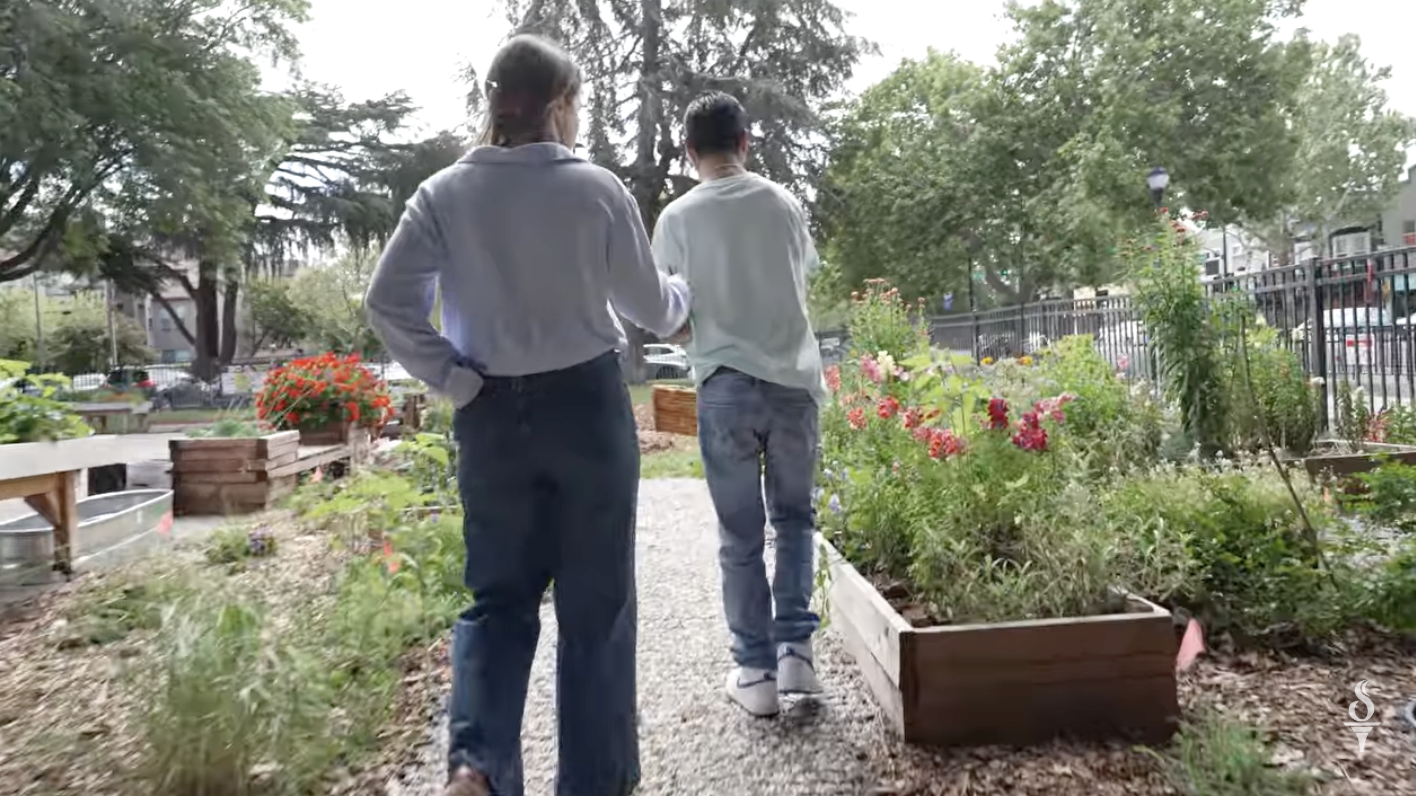
We serve approximately 400 students ages 3–22 across 50 SCCOE special education classrooms, including students with autism, intellectual disabilities, orthopedic impairments, multiple disabilities, complex communication needs, and medical fragility. Equity is built into every component of the program. Adaptive tools, raised beds, accessible pathways, AAC integration, visual task scripts, and predictable routines ensure learners with mobility, sensory, or communication needs can participate fully.
The program supports SCCOE’s LCAP goals to enhance student engagement, expand access to standards-based instruction, strengthen social-emotional well-being, and increase community connection. It aligns with State Priorities 2, 4, 5, and 6 by providing inclusive environments, authentic vocational practice connected to WorkAbility, and meaningful partnerships that create real-world learning opportunities for students with extensive support needs.
Program Goals
The Environmental Education Program consistently demonstrates strong gains in engagement, communication, independence, and self-regulation for students with extensive support needs. Teachers report that students who struggle in traditional settings thrive outdoors, showing longer on-task behavior, increased verbal and AAC communication, and calmer regulation during gardening, greenhouse work, and composting routines.
The program provides authentic vocational learning aligned with WorkAbility. Students participate in full work cycles from planting to production to community contribution. This year, students assembled and sold 147 bouquets through the Hester’s Flower Farm partnership and grew more than 200 seedlings, which were donated to schools and community partners. Across 50 classrooms at 15 SCCOE sites, students engage in job tasks such as watering, harvesting, sorting, weighing, and delivering products to senior care homes and local organizations.
Families report increased confidence and joy in their children’s daily experiences, noting that the garden provides a safe, calming space for exploration and growth. Multicultural gardens deepen identity, connection, and belonging by inviting families to share plants and stories from home.
Teachers also observe progress toward IEP goals in communication, motor development, and social-emotional skills. 100% of students enrolled in participating ESN programs participate.
Impact on Students
The Environmental Education Program began in 2022 after SCCOE leaders observed strong environmental learning in general education settings and recognized that students with extensive support needs were not receiving the same opportunities. They believed that with thoughtful design and appropriate adaptations, all students could benefit from meaningful outdoor learning connected to regulation, engagement, and vocational readiness. What began at four sites has grown to more than 15 campuses, driven by teachers, WorkAbility staff, therapists, and community partners.
Innovation is central to the model. Adaptive tools, raised beds, indoor planting carts, and sensory-friendly materials ensure students can participate safely and confidently. Occupational therapists co-teach lessons to support motor access, tool use, and environmental modifications. When outdoor spaces are unsafe or inaccessible, the garden moves indoors so no student is excluded.
This focus on individualized access has led to breakthroughs. One medically fragile student who observed bouquet-making for weeks was eventually able to place a flower independently, demonstrating how intentional design unlocks participation.
Community partnerships extend innovation. Climate Corps Fellows support sustainable practices, while local agencies donate compost, tools, plants, and materials. Districts now visit SCCOE sites to learn from the model, recognizing its adaptability and potential for countywide replication.
Innovation
The Environmental Education Program has been in place since 2022 and continues to expand across SCCOE sites. Sustainability is embedded through durable infrastructure, low-cost materials, and consistent staffing support. Garden beds, raised planters, nurseries, greenhouses, composting systems, and adaptive tools are reused year after year, minimizing replacement costs and supporting long-term implementation.
Program continuity is maintained through monthly and bi-monthly site visits from Environmental Education staff, along with trained teachers, paraeducators, and collaboration with OTs, SLPs, and behavior specialists. Shared routines, visuals, and instructional systems ensure the program remains effective even as staffing changes occur.
Community partnerships strengthen long-term viability. Climate Corps Fellows help maintain systems and build staff capacity, while Trader Joe’s, local garden organizations, and Master Gardeners donate soil, tools, seedlings, and materials. Students contribute by producing compost, saving seeds, and starting seedlings in-house, reducing recurring costs.
Family engagement further supports sustainability. Families volunteer during harvest days, bouquet deliveries, and campus garden events, reinforcing shared ownership. The program’s visible impact on student engagement and independence has generated strong support from administrators, staff, and community partners, ensuring it remains a valued component of SCCOE’s educational ecosystem.
Sustainability
The Environmental Education Program was intentionally designed to be replicable across SCCOE and other districts. What began in 2022 at four sites serving 17 classrooms now supports more than 50 classrooms across preschool, elementary, secondary, and post-secondary programs. This growth demonstrates that the model can be implemented successfully across diverse settings and student populations with varying support needs.
Replication is possible because the program follows a clear, step-by-step process. Each new site begins with an observation of available space and student needs, followed by collaborative planning to identify priority outcomes. Teachers are supported in using outdoor and indoor garden spaces as extensions of the classroom to address IEP goals, WorkAbility competencies, and standards-based instruction through authentic routines.
Written procedures and shared resources support consistent implementation across sites. These include indoor nursery instructions, seed-saving guides, visual task scripts, a WorkAbility-aligned list of vocational skills, and differentiated environmental lessons. Each resource clarifies materials, staffing expectations, and maintenance routines, reducing start-up barriers.
Replicability
Supporting Data & Info
Video of Program