Building Resilience Through Wellness Centers
Los Gatos-Saratoga Union High School District
Video of Program
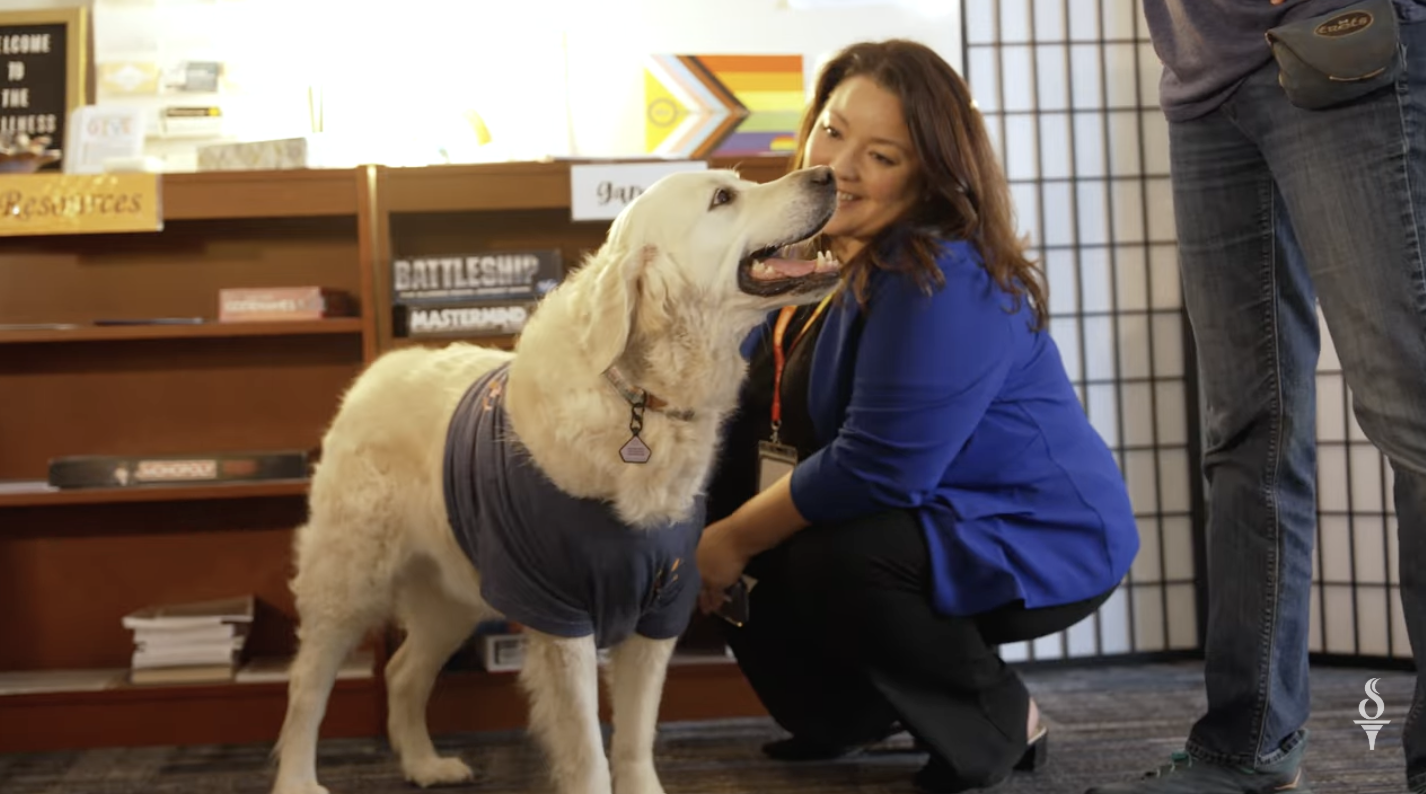
The Wellness Centers in LGSUHSD were built on a simple belief: when students feel safe, connected, and seen, everything else becomes possible. Since opening at Saratoga HS (2019) and Los Gatos HS (2021), the Centers have reshaped student well-being by making mental health care visible, normalized, and part of daily campus life.
What began as a small team has grown into a fully staffed, district-run system with therapists embedded on campus, therapy dogs on site, active peer groups, and student-designed spaces that make seeking support feel natural.
The change is cultural. Students self-refer, bring friends in, and seek support earlier. Peer groups lead campaigns that reach more than half the student body, classrooms welcome wellness workshops, and teachers support brief 20-minute visits that help students return regulated and ready to learn. The district moved from isolated services to a comprehensive, community-supported wellness ecosystem and a model for schools across the region.
Program Summary
With initial data showing a dark reality for our students’ mental health on campus, the Wellness Centers were created to normalize mental health awareness and ensure all students were aware of how they could seek support. Far deeper than reviewing utilization numbers, students now walk in before moments become crises. They self-refer. They refer friends. They ask teachers for time to decompress. Twenty-minute visits bring them back to class regulated, grounded, and ready to learn, something rarely seen just a few years ago.
Aligning with LCAP Goal 1 (IGNITE student engagement) and Goal 3 (NURTURE caring communities), and advancing State Priorities 5 (Engagement) and 6 (School Climate), the district’s LCAP metrics confirm this shift; dramatic improvements in meaningful participation (LGHS +7 in 11th grade; SHS +9 in 11th grade) and school connectedness (LGHS +5 in 9th grade; SHS +7 in 11th and 12th grades) rose across nearly every grade level. And just in this past year, average days absent decreased from 8.7 to 8.5, and chronic absenteeism dropped from 9.3% to 8.9%. Even in a community marked by high expectations and intense pressure, more students now say through survey data they feel connected, supported, and able to keep going.
What once was hidden is now embraced and lives are changing because of it.
Program Goals
The story of our Wellness Centers began with a hard truth: the old way wasn’t enough. Before 2019, a struggling student might be sent to a distant office, referred out, or expected to “push through.” Stigma was strong, help was hidden, and too many students carried pain alone.
The Wellness Centers were built to change that, replacing silence with visibility and stigma with belonging. Saratoga opened the first Center in 2019 and Los Gatos followed in 2021 as students returned from the pandemic facing isolation, academic pressure, and the grief of a growing fentanyl crisis. The goal was simple & urgent: create a space at the heart of campus where students feel safe, connected, and supported the moment they need it.
In a district of ~3,000 students, the Centers now serve nearly 50% of each school’s students annually. Student visits continue to rise: up ~26% at LGHS and ~29% at SHS over four years. This fall semester to date, the Centers have welcomed 3,649 visits at LGHS and 2,492 at SHS, reflecting sustained and growing demand.
As access has increased, student outcomes improved. The California Healthy Kids Survey (CHKS) results show “I am happy to be at this school” rose from 57%→73% at LGHS (+16) and 54%→71% at SHS (+17). The percent reporting prolonged sadness/hopelessness that stopped usual activities fell from 48%→28% at LGHS (-20) and 35%→21% at SHS (-14). The Wellness Centers created a culture where reaching out is a strength, and the evidence shows it’s working.
Impact on Students
Transformation does not happen by accident; it happens through innovation that rewrites the rules. The district rejected the conventional model of placing therapists in leftover classrooms on campus and instead put them in the heart of the Wellness Centers: visible, and stigma-reducing. Students no longer walk down hallways feeling exposed; they walk into a place that looks and feels like theirs.
And it truly is. Students chose the lights, some of the furniture, and even the teas at the Wellness Bar. They shaped a space that feels like belonging, not a clinic. This student-led design was an innovation in climate-building, turning mental-health support from something secret into something normalized and shared.
The transformation deepened when we empowered students. Student-led groups (Sources of Strength teams, Wellness Helpers, LGBTQ+ student leaders, and club representatives) use the Centers as a hub to plan awareness campaigns, host Coming Out Week, and elevate stories once silenced. Their reach is real: events and messaging now touch more than half the student body, building protective connections and help-seeking norms campuswide. Each year, Sources of Strength training is delivered on campus, strengthening student leadership, adult ally networks, and a shared language of support.
Even other schools see the impact. More than 30 schools have toured the LGHS Center alone, many walking away inspired to replicate what they call “a culture shift, not just a room."
Innovation
A transformation of this scale lasts only when a community chooses to sustain it - and this one has. What began with one therapist, one coordinator, and borrowed agency hours has grown into a district-led behavioral health program staffed fully by district-employed clinicians with annual roll-over in the budget.
Community partnerships have strengthened the foundation. The Los Gatos Lions Club and Saratoga Education Foundation raise funds annually to ensure therapy dogs are present five days a week, offering unconditional comfort that draws even the most hesitant students through the door. They invite the Wellness Center staff to present to their members and they offer scholarships and opportunities to students through the Wellness Center’s impact. These partnerships transformed the Centers from “programs” into community-supported ecosystems.
The district’s LCAP Action 3.1 formally embeds Wellness Centers as a core component of student safety, engagement, and emotional well-being. CHKS metrics, attendance shifts, climate indicators, and student feedback guide ongoing changes, creating a cycle of continuous growth.
In just a few years, the district moved from isolated supports to a thriving, sustainable network where therapists, teachers, parents, peer-leaders, and community partners all play a role. This is not a temporary initiative; it is now part of who the district is.
Sustainability
When other districts visit, they often expect a complicated system or costly infrastructure. Instead, they find something powerful in its simplicity: a welcoming space, district-employed therapists in plain sight, clear referral pathways, strong coordinators, and students leading wellness campaigns.
A key differentiator, and a major reason the model works, is teacher buy-in. Teachers trust the process because students can stop in as needed, the Wellness Center Coordinator communicates with staff quickly, and students consistently honor the 20–30 minute limit, returning to class on time and respectfully, not misusing visits to “come back again.” - a simple procedure that is easy to replicate.
This model is already spreading. More than 30 schools (public, private, large, and small) have visited our Centers to learn from an approach they see as attainable and culture-shifting.
The model relies on components any district can adopt, supported by written goals, procedures, and consistent protocols across both schools: a central space; district-employed therapists; a Wellness Coordinator; clear MTSS-rooted protocols; peer-led programming; community partnerships (e.g., therapy dogs); and alignment with LCAP goals and annual CHKS measures.
To scale, we emphasize training and shared procedures so any school can replicate the same expectations, communication loops, and supports.