Dual Enrollment with West Valley College
Campbell Union High School District
Video of Program
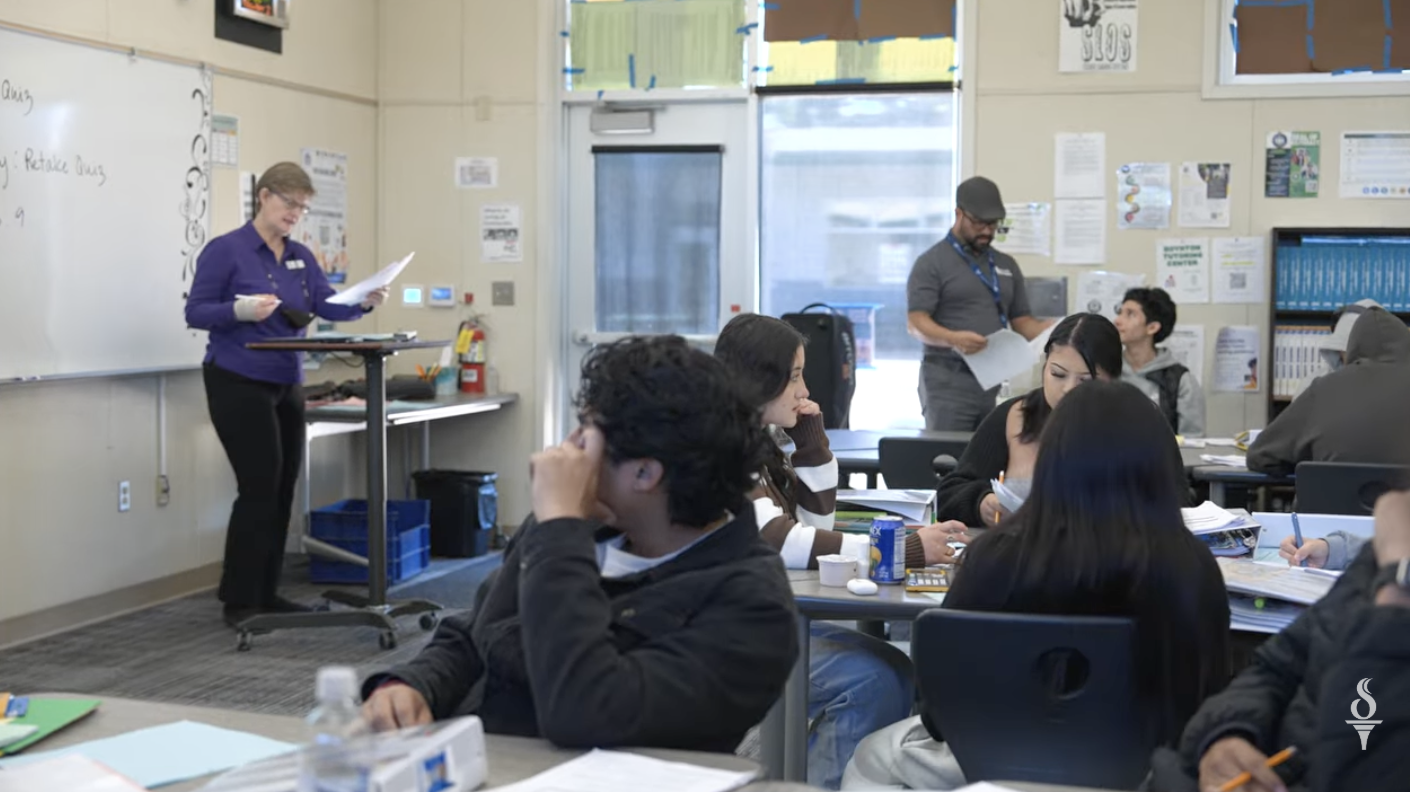
In our Dual Enrollment Program, high school students earn college and high school credits simultaneously through a College and Career Access Pathways (CCAP) partnership with West Valley College. The Board of Trustees first approved the CCAP agreement in 2018, and the program has expanded from a single course offering to 29 diverse courses in 2024-2025 across all sites. Students access college-level coursework in diverse pathways including career technical education, transfer preparation, and skill-building. With 92% of students passing with a C or better in 2024-2025, the program demonstrates that rigorous college coursework is accessible to all students. We specifically recruit students underrepresented in higher education through no cost enrollment, eliminating tuition and textbook barriers. This equity-focused approach serves Special Education students, English Learners, socioeconomically disadvantaged students, and first-generation college-bound students.
Program Summary
Many CUHSD students face barriers to college access, particularly those who are underrepresented in higher education. Traditional pathways often exclude these students from early college exposure.
While open to all students, we intentionally recruit underrepresented populations: Special Education (4.6% average participation since 2018), socioeconomically disadvantaged (27%), Hispanic/Latinx (21%), African American (1.7%), and English Learners/Emerging Multilingual (1.5%).
Our multi-tiered equity-minded recruitment strategy includes:
Counselor leads at each site sharing information via Parent Square and Canvas
Targeted outreach through Latino/a Parent Meetings at school sites
Coordination with the Director of Special Education to recruit students for College Study Skills course offered by West Valley College’s Disability and Educational Support Program
Partnership with the Senior Coordinator of Educational Equity for English Learner/emerging multilingual outreach
Curated course offerings aligned with student interests and career pathways
This program directly supports state priorities including student achievement, implementation of state standards, parental involvement, and course access. It addresses LCAP goals for college and career readiness while reducing equity gaps by providing free college-level instruction at our schools, eliminating cost and transportation barriers that disproportionately affect underserved populations.
Program Goals
Our program demonstrates strong academic success with an average of 88% of dual enrollment students earning a C or better since 2018, proving that with proper support, all students can succeed in college-level coursework.
Growth Metrics:
2022-2023 = 20 student course enrollments
2023-2024 = 194 student course enrollments
2024-2025 = 576 student course enrollments
Five-year trend data shows sustained participation of target student groups
The program serves a significant and growing portion of our student body, with particular success reaching target populations. Overall, in 2024-2025 - our biggest implementation year yet:
Socioeconomically Disadvantaged: 24% population participation; 88% earned a C or better
Hispanic/Latinx: 19% population participation; 89% earned a C or better
Special Education: 5% population participation; 60% earned a C or better
English Learners: 1.8% population participation; 89% earned a C or better
Students accelerate their post-secondary progress, save on future tuition costs, and gain confidence in their ability to succeed in college. For first-generation college students and underrepresented populations, this early college experience is transformative, demystifying higher education and creating a college-going identity while still in high school.
Students graduate with college credits, reduced time to degree completion, and demonstrated college readiness, significantly improving their post-secondary outcomes.
Impact on Students
When Assembly Bill 288 passed, we set out to transform college access. Rather than focusing on only high-achieving students, we designed dual enrollment to specifically target & support students traditionally underrepresented in college.
Partnership - We entered an agreement with West Valley College, ensuring a wide variety of course options
Diverse Courses - In 2024-2025 we offered 29 courses from multiple disciplines & delivery modes—in-person at high school sites, on college campuses, both synchronous & asynchronous online, and a co-taught Pre-Statistics course at our Continuation school during the school day—removing logistical barriers for all students. Courses range from Medical Terminology & Graphic Design to American Sign Language & Intermediate Calculus
No-Cost to Students - A critical equity feature that ensures socioeconomically disadvantaged students have equal access
Inclusion - We recruit Special Education students & offered a College Study Skills course specifically designed to support their transition to college-level work
Flexibility - Course offerings at various times & locations accommodating diverse needs & schedules
Key Challenges Overcome
Shifted mindset that dual enrollment is only for advanced students
Built infrastructure to support underrepresented populations in college coursework
Created awareness among families who may not see college as accessible
Developed culturally responsive recruitment strategies through Latino/a Parent Meetings
Innovation
Since 2018, the program has grown from 1 course offered to only juniors & seniors to 29 courses offered to all district students in all grades, including our continuation school.
Strong Infrastructure:
Senior Coordinator of College & Career Readiness support
Site-based counselor leads at each high school
Established communication systems: Parent Square & Canvas
Collaborate with Director of Special Education & Senior Coordinator of Educational Equity
Coordinate with Director of the School of Continuing Education at West Valley College & their Vice President for Strategy and Equity
Multi-tiered marketing with Coordinator of Community Engagement support
Annual agreement renewal process for ongoing review & improvement
Via CCAP agreements, the state gives funding directly to community colleges for dual enrollment. CUHSD buys only instructional materials, making the program sustainable without major general fund impact. The legal framework ensures long-term funding structure
Stakeholder Support:
Board: Approved initial & expanded agreements show governance support
Students: 88% average pass rate shows strong student engagement & satisfaction
Parents: Positive response to outreach at Latino/a Parent Meetings & other engagement opportunities
Community Colleges: Strong partnership shows institutional commitment
Educators: Site counselors promote & support student participation
Scalability: 5-year growth trend shows ability to expand with maintained quality & equity focus
Sustainability
This program is replicable by any California district due to the statewide framework. Our model can be adapted at any high school in California.
Resources Available:
Template CCAP partnership agreements with community colleges
Board presentation samples documenting goals, monitoring, and equity outcomes
Annual reporting requirements to Community College Chancellor for accountability
5 years of implementation data show what works
Expanding from 1 course at 1 site to 29 courses across all sites shows scalability
Implementation Requirements:
Develop Partnership: Contact local community college(s) to establish agreement
Staffing: Leverage existing positions for coordination and site leads,
Communication Systems: Use existing communication platforms
Equity Focus: Coordinate with equity, EL, and special education staff
Board Approval: Present as information item, then approve at public meeting
Reasonable Cost: Community colleges provide instruction funded by the state
No costs for students
Primary district costs are some staff (often absorbed) and instructional materials
No facility costs with existing classrooms and online courses
Adaptability- Districts can customize:
Number and type of community college partners
Course offerings based on student interests and local needs
Target populations based on district demographics
Scale
Key Success Factors: Leadership commitment, intentional equity focus, strong communication, & collaboration with community colleges